Improve your performance with poles

horse jumping over an obstacle
Pole exercises for horses can be a great addition to your schooling sessions, keeping things exciting for both you and your horse. You can be as creative as you like, setting out as many different shapes and lines as your imagination will allow! As well as making flatwork more exciting, horse polework can also help develop your horse’s core stability, improving balance, control and steering, as Petplan Equine vet Juliette Edmonds explains.

Quick Links

‘I find polework for horses very useful for many things and advocate its use during training and rehabilitation from a wide range of injuries,’ she says.  ‘It is a versatile training method, which can be used at walk, trot or canter, in-hand or ridden and can help increase the range of motion in the limbs and spine, while providing low-impact exercise particularly when used at the walk and in-hand.

‘Poles can improve a horses’ proprioception (awareness of the placement of the limbs), balance, rhythm, suppleness and straightness. In young horses I find walking over poles in-hand can noticeably improve their proprioception, which benefits their balance when ridden, particularly when jumping or crossing uneven ground, for example, during cross country.’

For horses returning from injury, there has often been a period of rest and possible confinement, which can lead to stiffness and muscle-mass loss from inactivity. Juliette will often recommend walking over poles during the ground-work period between box rest and returning to ridden exercise.

‘This can help to encourage improved joint flexibility and start to build topline and hindquarter muscle with controlled in-hand exercise,’ she explains. ‘There is also the benefit of increasing a horse’s interest levels in slower ridden work or ground work – by keeping the work varied, they are more likely to stay engaged and interested, and hopefully enjoy the work more.’

Trot poles can be used to help train a horse to shorten or extend the trot stride, and the exercise can be made more strenuous by raising the poles to increase the activity required and add elevation to the pace.

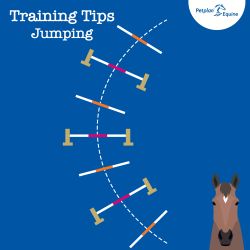
‘Canter poles are particularly useful prior to jump training to establish the correct canter rhythm and pace required so that the stride pattern is correct when the poles become fences on related distances,’ Juliette says. ‘I use poles on a curve to add engagement of the inside hindleg. Used in both directions, this will improve hindlimb engagement evenly and therefore encourage the horse to move and jump straight.’

Fancy having a go? We’ve put together a selection of polework exercises to help inspire you:

Click the icons below to reveal some great pole, jump and grid exercises for you and your horse to try.
Pole exercises

Pole exercises

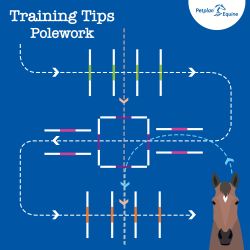
Pole work can be a great addition to your schooling sessions, keeping things exciting for both you and your horse. You can be as creative as you like, setting out as many different shapes and lines as your imagination will allow! As well as making flatwork more exciting, pole work exercises can also help develop your horse’s core stability, improving balance, control and steering.

We’ve put together a selection of pole work exercises to help inspire you...

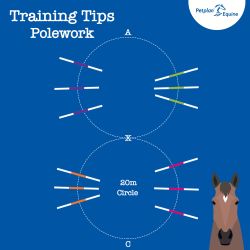
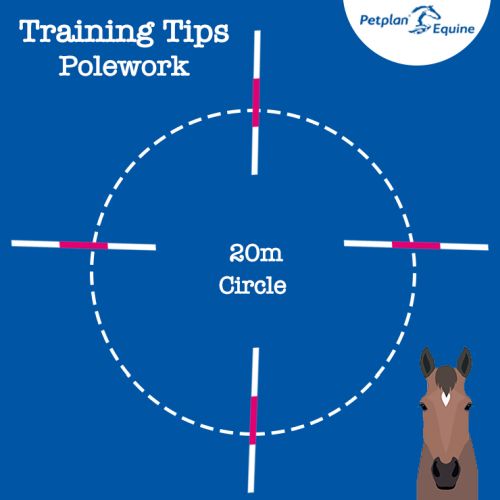
This exercise is great to test the balance and rhythm of your horse. Suitable for all levels of riders, this will really highlight whether your horse can keep a consistent rhythm around the circle.

the 20m circle
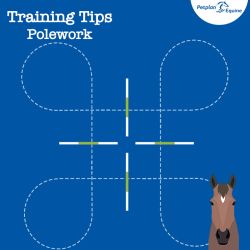
the clover

This exercise is good for testing your horse’s rhythm, accuracy and suppleness, testing you to ride between straight lines and around corners.

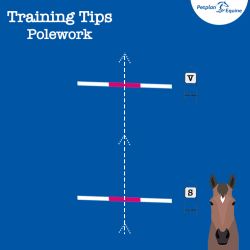
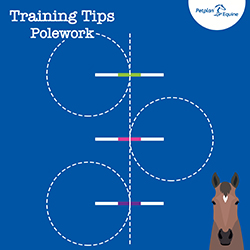
This exercise is very easy to set up and is great for testing the adjustability of your horse’s paces. This is especially good for playing with your horse’s canter.

the related distance
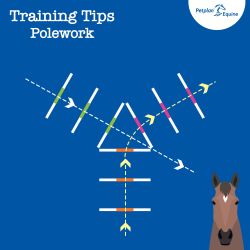
the triangle training tip

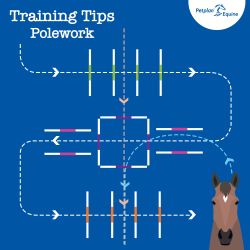
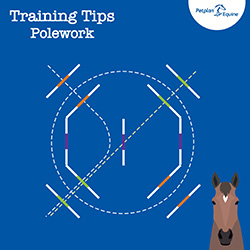
This exercise is useful to practise your centre lines and straightness, as well as riding a curved line. Easy to set up, this exercise is loved by all!

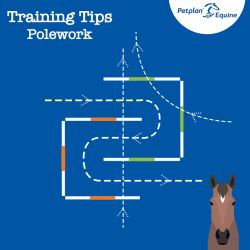
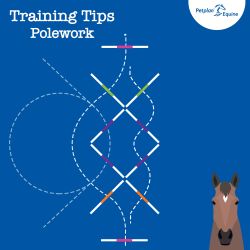
This exercise is great to work on suppleness and straightness and will highlight if your horse is really listening to you.

the interlocking s bend training tip
the diagonals training tip

This exercise is so easy to set up and gives you lots of options! Suitable for all, this one can really help your accuracy, control and direction.

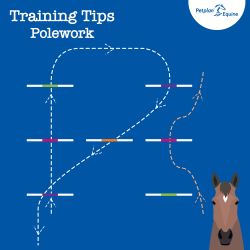
This exercise requires a lot of poles but can really help your test movements, for example your centre lines or serpentine! Use as many or as few poles as you have and enjoy this creative layout.

the serpentine training tip
the transitions circles training tip

This exercise can be really useful to help sharpen up your transitions in a fun way for both you and your horse. Suitable for all levels of riders, this will really help focus your transitions.

This exercise gives you so many options, helping you to work on straightness, suppleness or even just control! Easy to set up, this exercise is suitable for all levels of riders.

the criss cross training tip
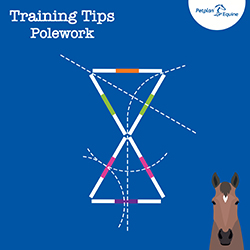
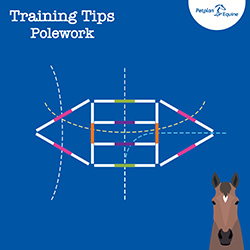
the hourglass training tip

This exercise is great to practise your straightness by riding down the centre, or add in some curves and circles to help your horse’s suppleness. Suitable for all levels of riders, this is an easy layout to try!

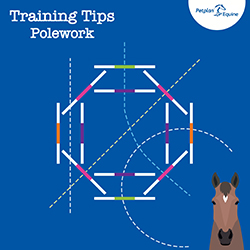
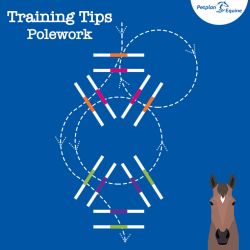
This exercise is good for all levels or rider and can be ridden in walk, trot or canter. It’s a great one to help introduce a change of canter lead, whether it is a simple or flying change.

the flying changes training tip
the octagon training tip

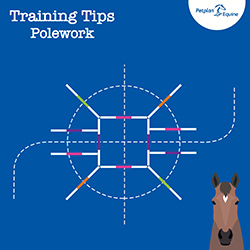
This exercise is a bit more creative and gives you so many different options - follow the guide lines or make up your own!

This exercise is useful to work on centre lines, changes of rein and suppleness and balance around a circle, and can be ridden in walk, trot or canter.

the spider training tip
the centre line circles training tip

This exercise is really simple to set out, but is more of a challenge than you think! It can really get both you and your horse thinking, as well as help work on rhythm and balance.

This exercise is great for practising straightness and encouraging suppleness! As well as going over the poles, you can also use them as a guide to ride a circle around the edges, or a figure-of-eight through the middle.

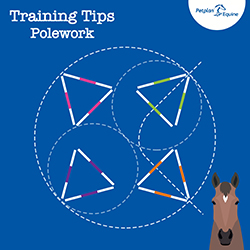
the four triangles training tip
the two points training tip

This exercise is so diverse and has lots of options in walk, trot or even canter and will really help your horse to think about where his feet are.

This exercise is so diverse and can be used to help your horse’s suppleness. Ridden in walk and trot, this exercise will really get your horse thinking about where their feet are.

the double triangle training tip

Jump exercises

Not all horses have the natural ability to jump, however if this is something that you and your horse enjoy, jumping can add great variety and a lot of excitement for both of you! Whether you compete in British Eventing, pure show jumping or are just looking to have some fun at home; jumping exercises can be key to helping your horse improve their strength, agility and balance, requiring precision and control.

Even if you are mainly a dressage rider, jumping can be beneficial to you and your horse. Dressage rider Amy Tilston says how she likes to use jumping and grid work as it “really helps with balance and strength as well as using it to get the horse to be a little quicker on their feet”.

We’ve put together a selection of jumping exercises to help inspire you to give it a try...

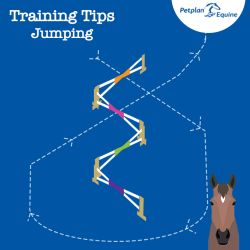
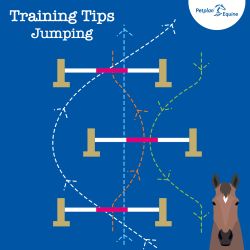
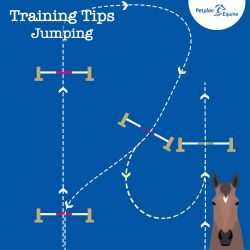
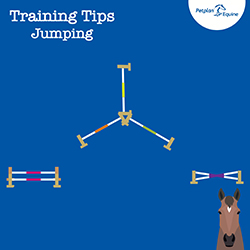
This exercise is great to practise your turns and line on the approach to a fence, and also for practising lead changes over a jump. Set this one up down the centre of your arena and off you go!

the zig zag training tip
the offset three training tip

This exercise gives you the chance to really test your control, straightness and accuracy! Set this up as pictured, with each jump two to four strides apart.

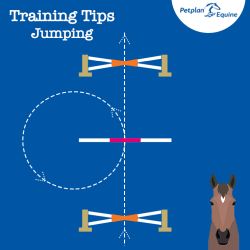
This exercise is great for horses who like to rush between fences and get a bit ahead of themselves! Use this one to work on rhythm and balance.

the related distance circle training tip
the square training tip

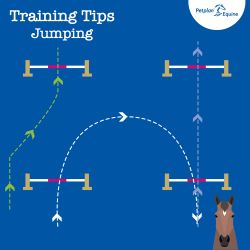
This exercise has a couple of different options which can help you work on your control, especially for horse’s that may start to anticipate where they’re going and stop listening to you as the rider.

This exercise may help horses who like to rush before or after a fence. It can equally be beneficial to those just wanting to work on their turns!

the right angle turns training tip
the jump off turn training tip

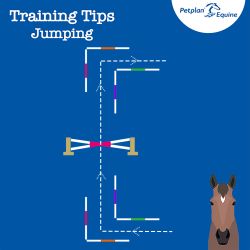
This exercise is easy to set up and can help you practise course riding and perfect your control, rhythm and those jump-off turns!

This exercise is so simple to set out, and is great to help work on the suppleness, rhythm and balance of your horse!

the serpentine training tip
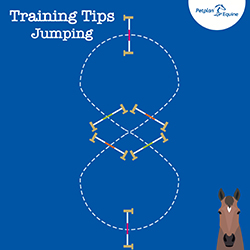
the figure 8 bounce training tip

This exercise can inject some gymnastics to your schooling and help you practise your changes in canter leads over a fence.

This exercise is great to practise your landing leads, but can also help to keep your horse guessing and not rush away from a fence.

the landing lead test training tip
the compact course training tip

This exercise is perfect to practise course jumping in a tighter arena. Use your cross pole fence as a warm-up, and then start linking the jumps together however you want!

Grid exercises

Grid work can be extremely beneficial to your horse, teaching them to be supple and reactive. It can be really useful to help young or green horses learn to keep a steady rhythm, not to rush and increase their confidence in jumping as the striding and take off points are set out for you!

The possibilities of grid layout are endless and different layouts can help improve different aspects of your jumping. For example, Petplan Equine rider Laura Gordon says “I also add in a lot more gymnastic exercises; such as bounces in a grid to help strengthen muscles but also to get him reacting and thinking quicker”.

We’ve put together a selection of grid work exercises to help inspire you to give it a try...

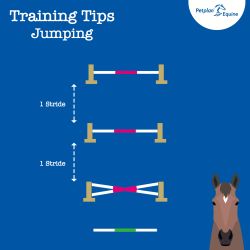
This exercise is a great starting point, especially for greener horses or those who have not done much grid work.

the simple grid training tip
the confidence giving grid training tip

This exercise can be particularly useful for horses who tend to rush through their grids or who need a little extra help to find a good take off spot, helping to build their confidence.

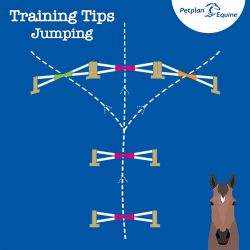
This exercise is great to make sure you are in control and your horse is listening and not anticipating where they’re going next! This can also help you practise your landing leads in canter.

the y grid training tip
the curved grid training tip

This exercise will really test the gymnastic ability of your horse, working on suppleness and balance. This exercise is something to work toward with greener horses as it is physically demanding and may be unsuitable for the less experienced horse.

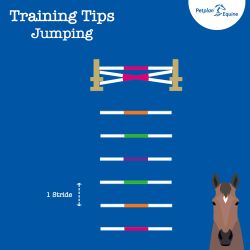
This exercise is great to help your horse keep a steady rhythm to a fence and reduce rushing. Use as many or as few poles as you have!

the rushing grid training tip
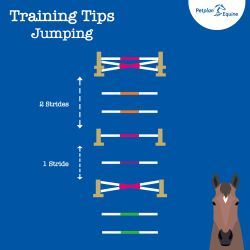
the bounce grid training tip

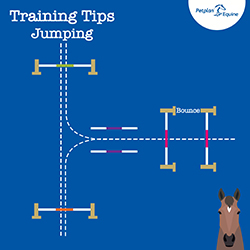
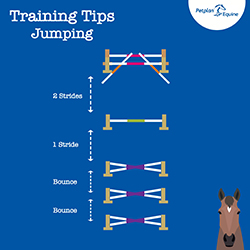
This exercise aim of this exercise is to help supple your horse, however can be physically demanding and you may need to work up to this if your horse is weak or green.

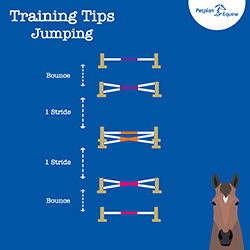
This exercise is great for gymnastic jumping and to encourage your horse to snap those knees and bounce along, using their back.

the gymnastic grid training tip

Unsure how to correctly set out your poles? Check out our Stride Guide with Petplan Equine's rider Laura Gordon.

We're here with International dressage rider, Charlie Hutton who explains to us the benefits of using polework as part of your horse's training. Petplan Equine's rider Charlotte Wadley also runs through some of Charlie’s favourite polework exercises.

Found this article useful? Want to see similar content and engage with like-minded horse owners? Follow us on Petplan’s Facebook page.
Follow us

Petplan Equine is a trading name of Pet Plan Limited (Registered in England and Wales with company number 1282939) and Allianz Insurance plc (Registered in England and Wales with company number 84638). Pet Plan Limited is authorised and regulated by the Financial Conduct Authority. Allianz Insurance plc is authorised by the Prudential Regulation Authority and regulated by the Financial Conduct Authority and the Prudential Regulation Authority reference number 121849. Registered address: 15 Bishopsgate, London, EC2N 3AR