
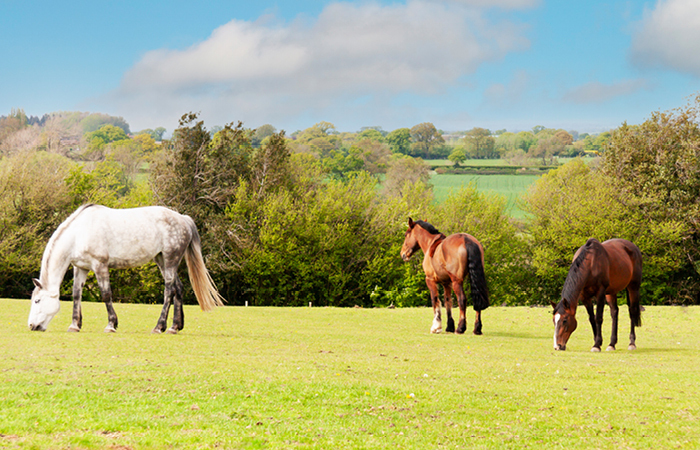
Turning horses out for spring and summer
From field management and sun protection to parasite control, thoughtful planning helps horses to reap the benefits of turnout through spring and summer.
Turnout is essential to horses’ physical and mental wellbeing – even if only for a few hours a day. Access to grazing allows horses to move as they choose, eat little and often, and spend time with companions – all behaviours that are difficult to replicate in a stable, however well managed.
The benefits of turning out horses
Physically, gentle, continuous movement around a field helps horses stay looser through the body, maintaining muscle tone and joint mobility, and supporting bone strength over time.
This low-level activity also keeps the digestive system ticking over, staving off issues such as colic or gastric ulcers. Time outdoors also limits exposure to stable dust and ammonia from urine, both of which can trigger respiratory conditions in some horses.
The mental benefits are just as significant. Regular turnout relieves boredom and frustration, lowering the likelihood of stereotypic behaviours such as weaving, wind sucking or box walking.
As social animals, horses also gain from spending time with others, whether that involves mutual grooming, playing or learning to navigate herd dynamics. But individual horses do have their own preferences – some thrive in busy groups, while others prefer quieter company.
How to turn a horse out safely
Safe turnout requires attention to several areas: the environment itself, pasture quality, seasonal challenges and ongoing health monitoring.
Environment first
Horses should always have access to shelter, whether that’s trees, hedgerows or a purpose-built field structure that protects them from sun, wind and rain.
Regularly check paddock fencing and hedge boundaries, as weak spots, sharp edges or loose rails can quickly become dangerous. Other hazards such as rabbit holes, loose rocks or exposed roots can be easy to miss, so it’s worth a walk around the paddock every so often, rather than relying on a quick glance over the gate.
For horses transitioning from 24/7 stabling or moving to a new yard, gradual introduction helps prevent stress and injury. Never leave a new horse unsupervised during those critical first turnouts until you’re confident the group has settled.
Pasture management
Knowing which plants are toxic is essential for safe grazing. Ragwort, foxglove, ivy, yew, sycamore seedlings (and seeds), and bracken are all common culprits and should be removed at the root to prevent regrowth. Poisonous plants often establish themselves on poorer grazing, making ongoing pasture care especially important.
Rotational grazing is one of the simplest ways to stop fields from being grazed too tightly and encourages healthier grass growth when the paddock is being rested. Harrowing in dry weather breaks up droppings, exposing parasites to sunlight and killing them, while regular poo-picking remains one of the simplest and most effective ways to keep grazing clear.
Spring grass
Early spring grass can be particularly high in sugars, which may trigger insulin spikes and increase the risk of laminitis and/or equine metabolic syndrome in vulnerable horses. Managing access to grazing is therefore especially important when turning horses out on spring grass. Limiting access to lush pasture, using a grazing muzzle, strip grazing, and keeping a close eye on body condition all help to lower that risk.
Grass sugar levels are at their highest during sunny afternoons and lowest in the early morning or late evening. Bear this in mind when considering the best time of day to turn out a laminitic horse – especially if they are overweight or have equine metabolic syndrome.
Water and nutrition
Most horses drink in the region of 20 to 30 litres of water a day, depending on weather and activity levels, so clean, fresh water must always be available. Troughs and buckets should be checked daily and cleaned regularly to prevent contamination.
Seasonal changes also affect nutritional needs. Winter grazing is rarely adequate on its own, so usually needs to be topped up with extra hay or haylage. In arid summers, when the grass growth slows, additional forage may again be required to maintain condition.
Risks of turning out horses
Turnout does come with some risk – the odd knock or pulled shoe is hard to avoid entirely – but for most horses, the advantages far outweigh the downsides.
Careful grouping, avoiding overcrowded fields, and using alternative turnout areas (e.g. sand paddock or arena) during very wet weather can all help reduce the likelihood of problems. Keeping your horse insurance up to date is also sensible, so you’re covered in case of accidents or injury.
Wet, muddy ground
As any horse owner knows only too well, mud is one of the biggest challenges of turnout in the UK, no matter the season. Wet, muddy ground increases the risk of mud fever, thrush, and abscesses, while repeated wet-dry cycles can weaken hoof quality. Older horses, especially, may feel the effects of damp ground in stiff or arthritic joints.
Managing gateways, rotating turnout areas and providing dry standing where possible can help to reduce these risks. Turnout boots for horses can give extra protection on uneven ground or during rehabilitation, while overreach boots can prevent heel injuries and lost shoes. Horses should be checked at least twice daily (morning and evening), so minor problems are identified before they escalate.
Sun and insect protection
Horses with pale skin, pink noses or photosensitivity may need extra protection from the sun during the summer months, whether that’s a fly rug with UV protection, a lightweight turnout rug or a smear of sunblock on exposed areas.
Midges favour damp, still corners and dense vegetation, making exposed, breezy grazing a better option if possible. This can influence decisions on when to turn a horse out for summer, particularly for those prone to sweet itch.
Fly control during the summer months is an essential part of any routine, and options range from synthetic repellents like DEET to natural oils such as citronella and eucalyptus. Regularly check your horse all over for signs of irritation, rubbing or swelling – the mane, dock, and belly areas are most commonly involved – and consider a fly mask or fringe to help keep them comfortable and settled while they graze.
Parasite awareness and worming
Being outside means more exposure to parasites, so parasite control plays a key part in field management. Faecal egg counts (FECs) allow owners to identify which horses actually need treatment, rather than frequent routine worming – which can accelerate resistance and isn’t always necessary.
Many yards carry out FECs every 8–12 weeks. They can then combine targeted treatment along with poo-picking and rotational grazing to keep parasite levels under control.
How long should horses be turned out?
The timing of turnout can be just as important as duration. The best time of day to turn horses out on grass is often early morning or late evening during hot weather, when temperatures are cooler and grass sugar levels are lower.
Some horses do best with a few hours outside each day, while others thrive on full-day or overnight turnout. The benefits of turning horses out at night can include cooler temperatures, quieter fields and reduced insect activity, making it a practical option during the summer months.
Ongoing observation makes all the difference, as no two horses are the same. Watch how your horse copes with turnout and keep an eye on their weight, coat, hooves and behaviour. With careful management and ongoing attention, they can reap the physical and mental benefits of time outside.
Found this article useful? Want to see similar content and engage with like-minded horse owners? Follow us o Petplan Equine’s Facebook page.