
Horse rider fitness: Exercises and training for better riding
Improving your fitness can transform how you ride. From core strength and flexibility to cardio and balance, the right exercises will make you more effective, confident and safe in the saddle.
As riders, we spend hours thinking about our horses’ condition and fitness throughout the year – but what about our own?
Improving our fitness plays a central role in how effectively we communicate with our horse, how balanced we feel in the saddle, and how quickly we tire.
Why horse rider fitness matters
‘You need to have a certain level of fitness depending on the level you are riding at,’ says six-time Badminton winner Lucinda Green. ‘If you’re tired when you pull up after a cross-country or showjumping round, you probably aren’t fit enough.’
Whether you compete or just enjoy hacking, fitness matters. Staying balanced during an unexpected spook, maintaining posture through transitions, and avoiding post-ride soreness all make riding safer and more fun.
We all have our weaknesses, as do our horses. If you struggle more on one rein than the other, it’s likely that your horse will too. Working on these imbalances will help you become more effective in the saddle and, in turn, improve your horse’s balance and straightness.
How to improve horse rider fitness
A well-rounded horse rider fitness programme needn’t be complicated, time-consuming or involve an expensive gym. Any movement helps, but targeting specific areas will deliver the most significant benefits in the saddle. The best fitness exercises for horse riders focus on cardiovascular fitness, core strength, flexibility and balance.
Cardiovascular fitness for riding stamina
Good cardio fitness allows you to ride for longer without getting out of breath, recover quicker between movements and stay mentally sharp when your horse becomes tired or excitable. Anything that increases your heart rate will boost cardiovascular fitness.
Some exercises that can improve fitness are:
- Running: Even short, steady jogs improve stamina, rhythm and focus. Interval-style running, alternating jogging and brisk walking mirrors the stop-start demands of schooling and cross-country. Varying terrain, such as grass, trails or gentle hills, strengthens the lower legs and ankles – vital for a balanced lower leg in the saddle.
- Cycling: Builds leg strength without too much impact or strain on joints.
- Swimming: An effective full-body workout.
- Skipping: Sharpens coordination and reaction times.
Aim for two or three cardio sessions per week, on top of strength and stretching work.
Core strength for stability and control
A strong core underpins balance, posture and effective aids. Without it, riders might grip with their knees or collapse through the torso.
Pilates is great for horse rider fitness, as it builds deep core strength while improving body awareness. Key exercises such as planks, dead bugs and glute bridges are therefore excellent additions to any rider’s training plan.
Good fitness exercises for horse riders to build a strong, stable core include:
- Plank: Builds core stability for better posture in the saddle. Hold a forearm plank, keeping your body straight and core engaged. To progress, narrow your feet or increase the hold time.
- Glute bridge: Strengthens glutes and supports pelvic stability. Lie on your back with knees bent, pressing through your heels, and lift your hips toward the ceiling. For an added challenge, hold at the top or extend one leg.
- Dead bug: Helps you control your core on both sides. Lie on your back with your arms raised straight above you, and your legs up with a 90° angle at your hip and knee. Slowly lower your opposite arms and legs while keeping your spine neutral. Add ankle or hand weights to increase difficulty.
- Russian twist: Improves rotational strength and lateral control. Sit with feet lifted and rotate your torso from side to side. Hold a weight to make it more challenging.
- Superman: Strengthens lower back, glutes and postural muscles. Lie face down and lift arms and legs simultaneously. Lift alternate limbs for coordination and balance.
- Flutter kick: Targets deep core stabilisers. Lie on your back and lift your legs slightly off the floor, alternating in a controlled scissor motion.
Flexibility and symmetry in the saddle
Tight hips, hamstrings or lower back muscles can restrict movement and create asymmetry, affecting your horse’s balance. Stretching, yoga and Pilates improve flexibility and muscle symmetry, reducing tension and the risk of pain in compensating areas.
Regularly stretching the key muscle groups used in riding (including hip flexors, hamstrings, quadriceps, calves and lower back) makes a big difference.
Gentle dynamic movements before riding can help improve mobility and reduce stiffness afterwards, while static stretches held for 20-30 seconds keep muscles supple. Lunges, seated hamstring stretches and gentle spinal twists are particularly effective for preparing the body for the saddle.
Regular mobility work helps riders maintain equal strength on both sides, improving balance, straightness and communication with the horse.
Balance, coordination and reaction time
Balance and coordination are crucial for maintaining a centred, effective position in the saddle. Everyday exercises such as standing on one leg while brushing your teeth or doing calf raises on the stairs can help with balance.
Other simple ways to improve stability include:
- Heel-to-toe walking: Walk in a straight line, placing the heel of one foot directly in front of the toes of the other. This strengthens stabilising muscles and improves posture.
- Single leg reaches: Stand on one leg and slowly move the other leg forward, sideways and backwards, keeping your torso upright. This challenges balance and engages core muscles.
- Balance board or wobble cushion: Standing on a balance board or cushion for short periods engages the core and lower-leg stabilisers.
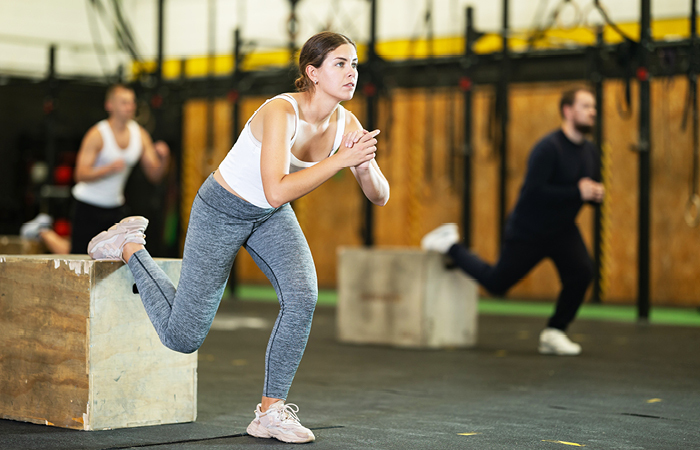
- Mini squats on one leg: Do shallow single-leg squats to strengthen hips, glutes and ankle stabilisers.
Incorporating these exercises into daily routines at home, during work breaks or at the yard helps improve balance, coordination and reaction time. When combined with cardiovascular training, core strength work and flexibility exercises, riders of all levels can stay centred, stable and safe in the saddle.
Found this article useful? Want to see similar content and engage with like-minded horse owners? Follow us on Petplan Equine Facebook page.