
How to cool down a horse in hot weather
Hot weather can be challenging for horses and owners alike. Knowing how to cool down a horse in hot weather – from stable management to hydration and exercise – is key to keeping them comfortable, healthy and safe all summer long.
Summer brings longer days and more time in the saddle, but it also means keeping an eye on how your horse is coping with the heat.
Horses can struggle to regulate their body temperature in hot or humid conditions, and without the right management, heat stress can develop. From adjusting your routine to knowing when and how to cool your horse down in hot weather, here’s what every owner needs to know.
How do horses cope with hot weather?
Horses cool themselves primarily through sweating and respiration. But when sweating alone isn’t enough, body temperature can climb to dangerous levels, leading to heat exhaustion and, in severe cases, serious health complications.
Humidity makes things worse by making it harder for sweat to evaporate and cool the body. Understanding how horses cope with hot weather can help you make better decisions about turnout, exercise and care on warm days.
Signs your horse is too hot – and what to do
Knowing the warning signs is essential when thinking about how to cool down a horse in hot weather. Indications that your horse is overheated include:
- Excessive or abnormal lack of sweating
- Rapid breathing or heart rate
- Lethargy or weakness
- Elevated temperature
More serious symptoms of heat exhaustion include rapid, shallow breathing, nostril flaring, an irregular heartbeat, muscle spasms and a high body temperature that is slow to return to normal (normal horse rectal temperature is 37.2–38.3°C).
If you notice these signs, act immediately: move your horse to a shaded, well-ventilated area and begin cooling with water as described below. Offer water to drink and keep monitoring. If symptoms do not improve, contact your vet straight away. In severe cases, a vet may need to give IV fluids, electrolytes and anti-inflammatories to rehydrate and stabilise your horse.
Having appropriate insurance cover can also provide peace of mind if unexpected veterinary treatment is needed.
How to cool down a horse
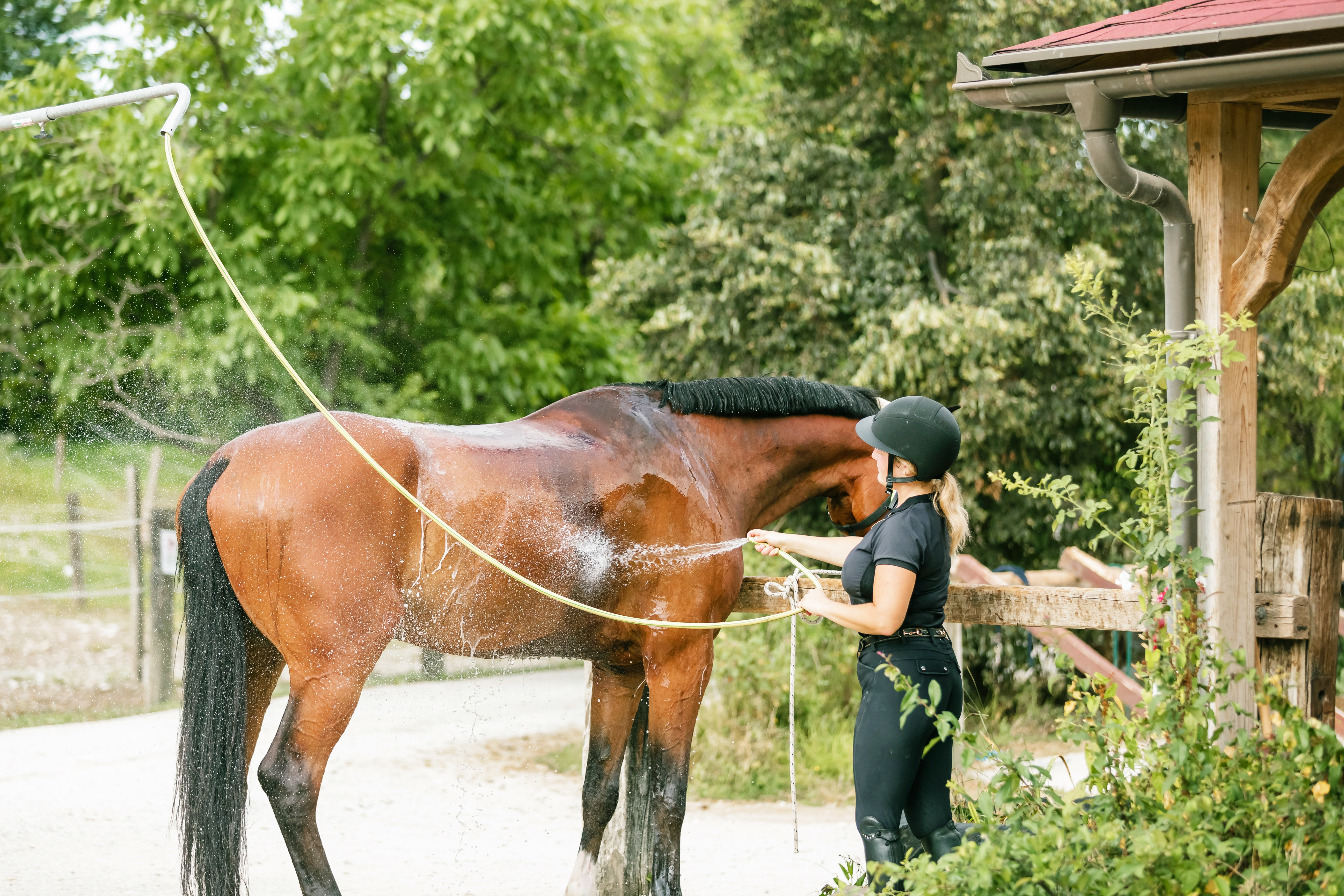
If you’re wondering whether you can hose down a horse in hot weather, the answer is yes – it’s one of the most effective ways. If your horse is showing signs of overheating, the priority is rapid cooling.
Hosing is one of the best ways to lower body temperature. Apply cool or cold water continuously over the body. Research shows a whole-body approach is most effective for reducing core temperature. Continuously apply the water and allow it to naturally evaporate from the horse’s body, to help the cooling process.
For horses not keen on the hose, sponging is a gentler alternative. In either case, continue until breathing steadies and temperature returns to normal.
Can you ride horses in hot weather?
As a general guide, when temperatures exceed around 25°C (especially in humid conditions), you should reduce the intensity of ridden work. If you must ride, adjust your schedule by riding early in the morning or later in the evening, keep work light with frequent breaks, and do not work your horse beyond their fitness level.
Always monitor your horse closely during and after exercise. Call a vet straight away if your horse stops producing sweat, breathes heavily, or becomes lethargic, distressed or uncoordinated. In some cases, lack of sweating may indicate anhidrosis, a condition in which the sweat glands fail to function properly, requiring immediate veterinary attention.
If travelling in hot weather, aim to travel during the coolest part of the day and make sure the horsebox or trailer is well ventilated. Avoid unnecessary journeys during periods of extreme heat.
Stable management: How to keep horses cool
How you manage your stable environment makes a real difference in how to keep horses cool in hot weather. Ventilation is the priority – keep doors and windows open (where safe) to keep the air flowing through. Wooden stables tend to heat up much more quickly than those with block walls, so if your stable is wooden, be especially mindful. Also, if your stable is south-facing it may heat up faster. Safe use of fans in the stable can circulate and draw out hot air.
Shade is equally important. If your horse is turned out during the day, make sure there’s somewhere they can retreat from direct sun, such as trees or a field shelter. If no permanent shelter is available, you can rig up a safe, temporary shaded area using heavy-duty, UV-resistant tarps or specialised shade cloth. Ensure secure fixing with no flapping hazards.
Adjusting turnout timing is one of the most effective and straightforward changes you can make. Consider turning your horse out overnight and keeping them in during the day to avoid the hot sun and the worst of the flies. Night or early morning turnout lets horses graze freely while avoiding peak heat.
How much water does a horse drink in hot weather?
Keeping your horse well hydrated is central to how to cool down a horse in hot weather. Water intake increases significantly in summer, and an adult horse weighing around 450kg needs a minimum of 40-60 litres of water each day. This rises further with exercise and heat.
Always provide constant access to fresh, clean water, and offer multiple sources in the field so horses are never far from a drink. Water temperature matters, too. Horses often prefer tepid water, particularly in hot weather.
Clean out water containers regularly. Horses can be reluctant to drink from troughs or buckets that are stagnant, algae-lined or tainted by plastic, which can quickly become a problem in warm weather when hydration matters most.
Electrolytes: Replacing what sweat takes out
When horses sweat heavily, they lose more than water. Equine sweat contains a large amount of sodium and potassium, and horses that sweat a lot may benefit from an electrolyte supplement as well as free access to a salt lick. Electrolytes help the body work properly by keeping fluids balanced and supporting digestion, nerve function and muscle contraction.
When adding electrolytes to water, always ensure plain water is available too, as some horses may be reluctant to drink electrolyte water. One important note: never give electrolytes to a horse that is severely dehydrated and not drinking, as this can make the situation worse. If in doubt, speak to your vet.
Clipping and coat care
Coat management is an often-overlooked part of how to keep horses cool in hot weather. Clipping removes the insulating hair layer from the body, which helps heat escape and improves evaporation. Clipped horses cool down more easily after strenuous exercise and may be at lower risk of heat stress. This is especially relevant for horses in regular work, or those that tend to grow a thick coat year-round – this is especially true for horses with Cushing's disease.
Fly protection matters during summer. Fly masks and repellents should be used consistently as fly activity increases in warm weather. A light-coloured fly rug or summer sheet works better than a dark one for keeping horses cool, as white is best for reflecting the sun’s heat. UV fly rugs can also help reduce the risk of sunburn, especially on exposed pink or unpigmented skin. In addition, suncream should be applied to sensitive areas, such as the muzzle.
Follow us on Petplan Equine’s Facebook page.