
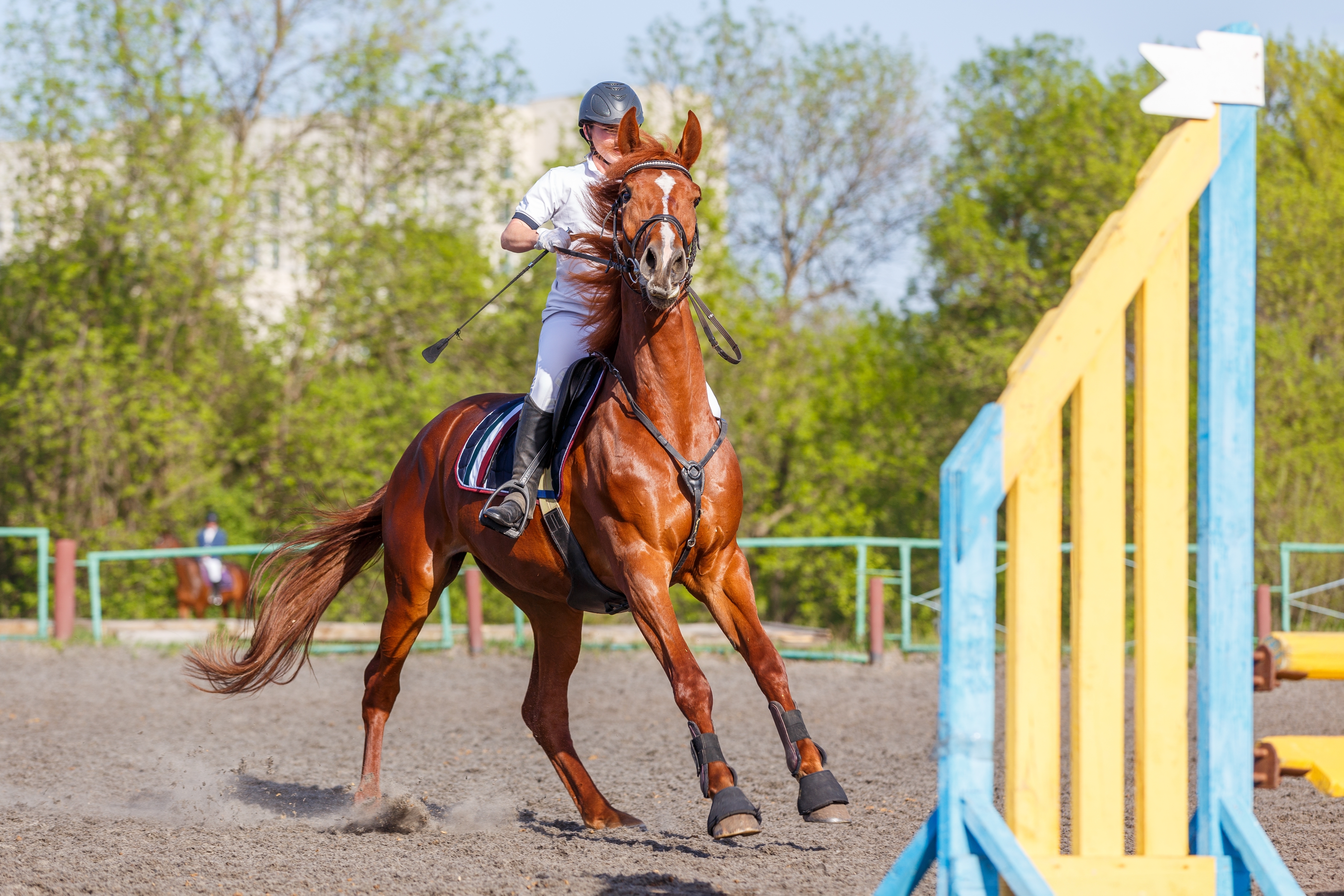
How to help a spooky horse
Discover why horses spook, how to calm them and how to build confidence in a spooky horse.
One moment you're enjoying a quiet hack, the next your horse has leapt sideways at a plastic bag, wheelie bin or imaginary monster in the hedge…
Spooking can seem to happen without warning, but there’s often a reason behind your horse’s dramatic reaction. Usually, it means they’ve seen, heard or smelled something that scares them, and physiological changes occur that prepare them for immediate action.
Horses vary in temperament, and some are naturally more reactive than others. This means that owning a spooky horse is not necessarily a reflection of training or management; it may simply be part of their natural makeup.
Why do horses spook?
As a prey animal, a horse’s first reaction to danger tends to be flight. This means that when they’re startled by something, they often move rapidly away from the perceived threat. This could be just a few strides (shying) or considerably further (bolting). Horses are highly attuned to sights, sounds and smells in their environment, which explains why they sometimes react to things humans barely notice.
If flight isn’t possible, other behavioural reactions can occur. Some horses freeze – a response that can result in them being labelled stubborn or lazy. If a horse feels cornered or unable to escape, they may choose to confront their fear and fight, though this is unusual except in extreme circumstances.
Spooking behaviour varies between horses, and a combination of genetics, temperament and previous experiences usually influences their level of reaction.
What might be causing spooky behaviour?
Many different things can cause spooking, from a dog suddenly barking, to a pheasant flying out of a hedge or an unexpected recycling bin on the roadside. Seasonal changes, such as fresh spring or autumn grazing, can also contribute to increased energy and reactivity in some horses.
When startled by something from the front or side, horses may shy away from the object. This creates greater distance between them and it, while also allowing them to view it from a different angle. Horses rely heavily on their vision to assess potential threats, so changes in lighting, shadows or unfamiliar objects can sometimes trigger a reaction. Because they have almost 350-degree vision, they also react to things behind them.
Different horses often respond to the same object in different ways. You might anticipate what your horse is most likely to spook at.
Could it be pain?
If your horse is suddenly spooky out of character, it’s important to rule out pain or discomfort.
When ridden, pain can cause a horse to move suddenly, react unpredictably or become more sensitive to their surroundings. Common sources of pain that may warrant a vet investigation include:
- Lameness
- Gastric ulcers
- Dental problems
- Orthopaedic issues
- Visual problems, including cataracts and age-related eye conditions
- Back pain
- Poorly fitting tack, including saddle and bridle
If you suspect pain could be behind a sudden change in behaviour, contact your vet for advice rather than assuming your horse is just being difficult. Having horse insurance in place can help you prepare for the unexpected if your horse needs veterinary investigations or treatment.
Could it be diet?
Feed can influence a horse’s energy levels and behaviour. Some horses are more reactive on diets high in starch or sugar, although responses vary between individuals.
Sudden changes in feed can also affect behaviour. If your horse is unusually reactive, it may be worth reviewing their diet with your vet or an equine nutritionist. Focus on a balanced forage-based diet and avoid making abrupt feed changes.
Early warning signs your horse may spook
Many horses give subtle signals before they actually shy or spin. Learning to recognise these signs can help riders respond early and provide reassurance. These common warning signs include:
- Raising the head and neck
- Increased muscle tension through the body
- Flaring nostrils or blowing
- Fixating on an object
- Slowing down or speeding up unexpectedly
- Becoming reluctant to move forwards
- Loss of attention on the rider
Recognising these signals is an important part of understanding how to help a spooky horse and can prevent a small concern from turning into a bigger reaction.
How to calm a spooky horse
If your horse spooks while out hacking, try to remain calm. Slow down, stop if appropriate and allow your horse to look at whatever has caught their attention. By relaxing and taking the pressure off, you are giving them time to assess the situation.
Some horses will then approach the object and investigate it with their nose. Horses have an acute sense of smell, which can help them identify unfamiliar objects and realise they’re not as scary as they seem.
When schooling, if your horse repeatedly reacts in one corner of the arena, avoid making a big issue of it. Most horses gradually stop spooking once they realise there is nothing to fear. Remember though, that when you change rein, they may view the object differently with the opposite eye and react again.
It’s important not to punish a horse for spooking. Whipping, kicking aggressively or forcing them forwards can increase anxiety and create an even stronger negative association with the object or situation. Instead, focus on helping your horse feel safe and confident.
When your horse spooks, try to remain balanced and secure in the saddle. Horses are sensitive to tension in their rider, so staying relaxed can help reassure and support them.
How to build confidence in a spooky horse
The best way to improve confidence is through gradual exposure to new experiences and objects. This process of desensitising a spooky horse allows them to learn that unfamiliar things are not necessarily dangerous.
As long as your horse remains calm enough to process what they are seeing, repeated positive exposure can help them become more relaxed over time.
Useful strategies for desensitising a spooky horse
- Introduce new objects one at a time. If possible, place them in your horse’s field and allow them to investigate at their own pace.
- Brush up on your equine body language skills so you can recognise early signs of anxiety and stress.
- Don’t rush. If your horse stops when approaching something unfamiliar, allow them time to assess it.
- If your horse spooks while hacking, try riding around the object rather than heading straight towards it.
- Hack out with a calm, experienced companion horse when possible.
- Incorporate groundwork exercises for spooky horses, such as leading past unfamiliar objects and walking over tarpaulins and different surfaces.
Consistent, patient handling is often the foundation of how to get a spooky horse to trust you and can make a significant difference over time.
Will equipment or supplements help?
For horses especially sensitive to sound, movement or visual stimulation, small management changes can help them feel more settled.
- Ear bonnets for spooky horses may help muffle sharp noises such as traffic, crowds or rustling leaves, and may help noise-sensitive horses stay more relaxed when hacking or competing.
- Blinkers or visors are occasionally used in racing and other disciplines to limit peripheral vision, but these may increase anxiety as the horse cannot see their surroundings clearly, so are not advised day-to-day.
- Many owners try calming supplements for spooky horses. Products containing ingredients such as magnesium, L-tryptophan or herbal blends may help some horses feel more relaxed, but results vary between individuals and scientific evidence is mixed.
How to train a spooky horse
When considering how to train a spooky horse, focus on building confidence rather than suppressing reactions.
Training sessions should be short, calm and progressive. Avoid overwhelming your horse with too many new experiences at once and remember that confidence develops gradually.
Whether you’re learning how to ride a spooky horse, how to bombproof a spooky horse, or simply looking for ways to improve their confidence, patience and consistency are key. While no horse can ever be completely bombproof, most can learn to cope with new situations calmly if they are given the time and support they need.
FAQs
Why is my horse suddenly spooky?
Can pain make a horse spooky?
How to calm a spooky horse
How to train a spooky horse
Have you got a spooky horse? Share your experiences and tips on Petplan Equine’s Facebook page.